
The TruLight Difference
Compare TruLight to Competitors
Permanent lighting is a real investment, and most companies make it hard to compare apples to apples. We go brand by brand: chip type, LED count, voltage, how zones actually work, warranty, and what the app looks like two years after install. Find the brand you're considering and see exactly how it stacks up.
See the Full Breakdowns
Hands-on video comparisons covering hardware, voltage, app features, and real install differences.
RGB White vs. RGBW Pure White
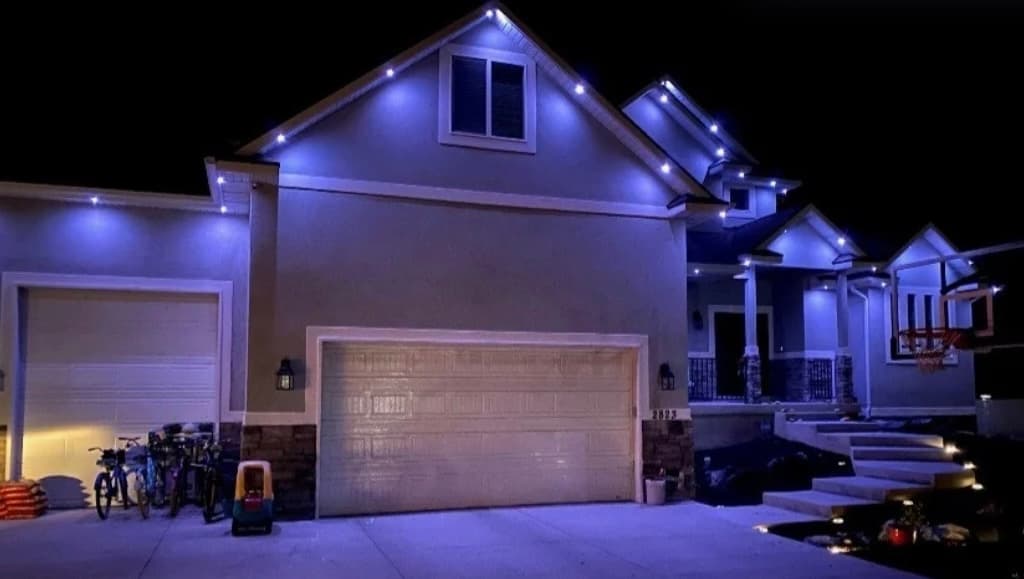
RGB “White”
Standard RGB systems mix red, green, and blue to approximate white. The result is a cool, bluish-purple tint that doesn't look natural, especially on warm-toned homes with stone, stucco, or earth-tone siding. The photo below is a JellyFish system set to white. JellyFish uses three RGB LEDs per node with no dedicated white diode, so its white is blended from color. See the full TruLight vs JellyFish comparison.
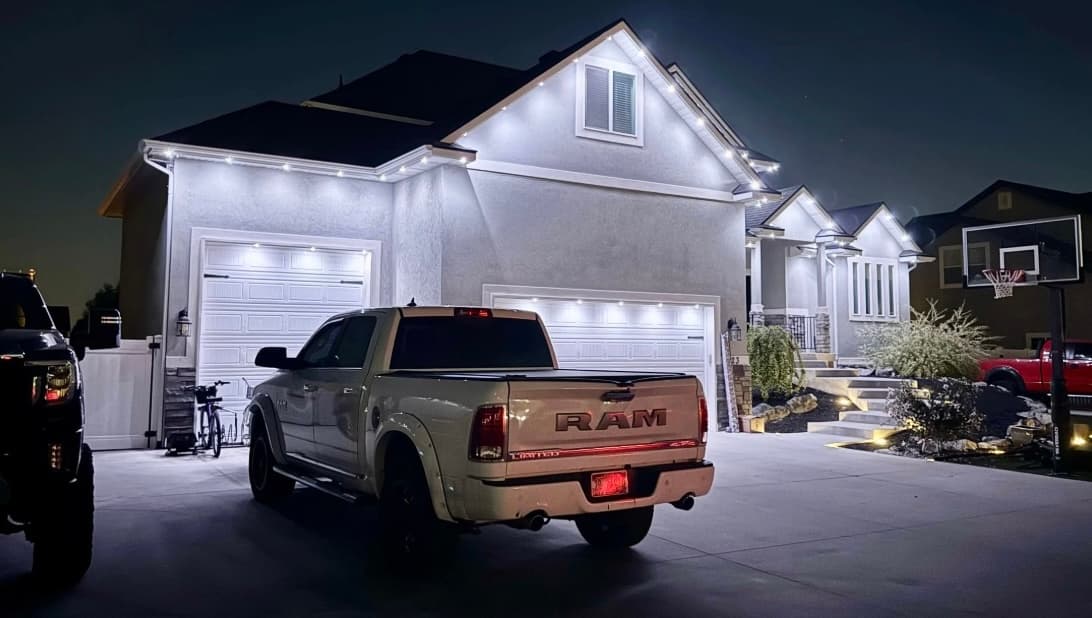
RGBW Pure White
TruLight uses 6 LEDs per light: 3 RGB + 3 dedicated warm white LEDs. This gives you two distinct white modes: a real warm white that flatters stone and stucco, and a true pure white by blending all 6 LEDs together. No RGB system can replicate this. The photo below is the same home. The owners wanted a cleaner white than RGB could give them, so the JellyFish system came down and TruLight went up.
Ready to Choose the Best?
See the difference for yourself with a free consultation.
Or try our “See Your Home with TruLight” preview tool to draw your roofline and see warm white, holiday colors, and more on your actual home before you commit.
Limited Lifetime Warranty. Full warranty details