Smart Outdoor Lighting Ideas For Salt Lake City Homes
It's a Tuesday in December, and you pull into the driveway at 5:35 PM. The sun set over the Wasatch Mountains twenty minutes ago, but your house isn't sitting in the dark. The roofline glows with a warm, soft white. The walkway LEDs are already on. The garage zones brightened the moment your car turned onto the street, then faded back to a gentle accent as you stepped inside. You didn't touch your phone. You didn't flip a switch. The system followed the schedule you already set. That is the point of smart outdoor lighting: less fiddling, more nights where the house is lit before you think about it.
What Makes Outdoor Lighting "Smart" in the First Place?
The word "smart" gets thrown around a lot. Smart toasters. Smart water bottles. At some point, everything became smart, and the word stopped meaning much. But with permanent outdoor lighting, the label actually fits.
A truly smart lighting system does more than turn on and off. It responds to your schedule, your seasons, and your daily routine. Here in the Salt Lake City area, that matters more than most people realize. According to Timeanddate.com sunset data for Salt Lake City, sunset moves from around 5:00 PM in mid-December to just after 9:00 PM in late June. That is why a fixed timer gets annoying fast. But a smart permanent lighting system adjusts automatically, tracking actual sunset times so your home is lit at exactly the right moment every single evening.
For homeowners in Draper, South Jordan, Sandy, and across the Wasatch Front, that means the lights can follow the season without constant timer changes. That's the real promise of smart lighting. Not flashy gimmicks. Just quiet reliability.
App Control: Your Whole House in Your Pocket
The app is the part most homeowners notice first. With a permanent LED lighting system, you control everything from your phone. Colors, brightness, schedules, zones, and scenes. All of it.
Want warm white along the roofline tonight? Two taps. Hosting a backyard dinner party in Cottonwood Heights and want something a little moodier? Dial the color temperature down. Kids' birthday party in Herriman? Go full color. The app puts you in charge without climbing a ladder or fiddling with a control box in the garage.
But here's what surprises most homeowners. After the first few weeks of experimenting, most people barely open the app. They set their preferences, build a couple of schedules, and let the system run. In real use, the app usually becomes something you set once and come back to for holidays or special nights. You might open it to set up a holiday schedule and then leave it alone for weeks. That "set it and forget it" factor is one of the most underrated parts of smart permanent lighting.
Automation That Follows the Seasons
Salt Lake City's seasons don't just change the temperature. They change the light. And a permanent lighting system that tracks seasonal sunset times is a bigger deal than it sounds on paper.
Think about it this way. In January, your lights come on around 5:20 PM. By April, they're waiting until 8:00 PM. By the summer solstice in June, they don't kick in until after 9:00 PM. You never have to update anything. The system does it for you.
This also means your lights aren't burning electricity while the sun is still up. In July, Salt Lake City gets roughly 15 hours of daylight, so the system can wait much later to turn on. In December, it comes on earlier because the days are shorter. The automation adjusts to match, and your Rocky Mountain Power bill stays predictable.
For homeowners in Eagle Mountain, Daybreak, and Lehi who are watching energy costs closely, this kind of automatic efficiency is a practical benefit that adds up month after month.
Zone Control: Different Lights Doing Different Things
This is where things get interesting. Zone control lets you divide your home's permanent lighting into independent sections. Each zone can run its own color, brightness, and schedule, all at the same time.
A few examples of how SLC homeowners actually use this:
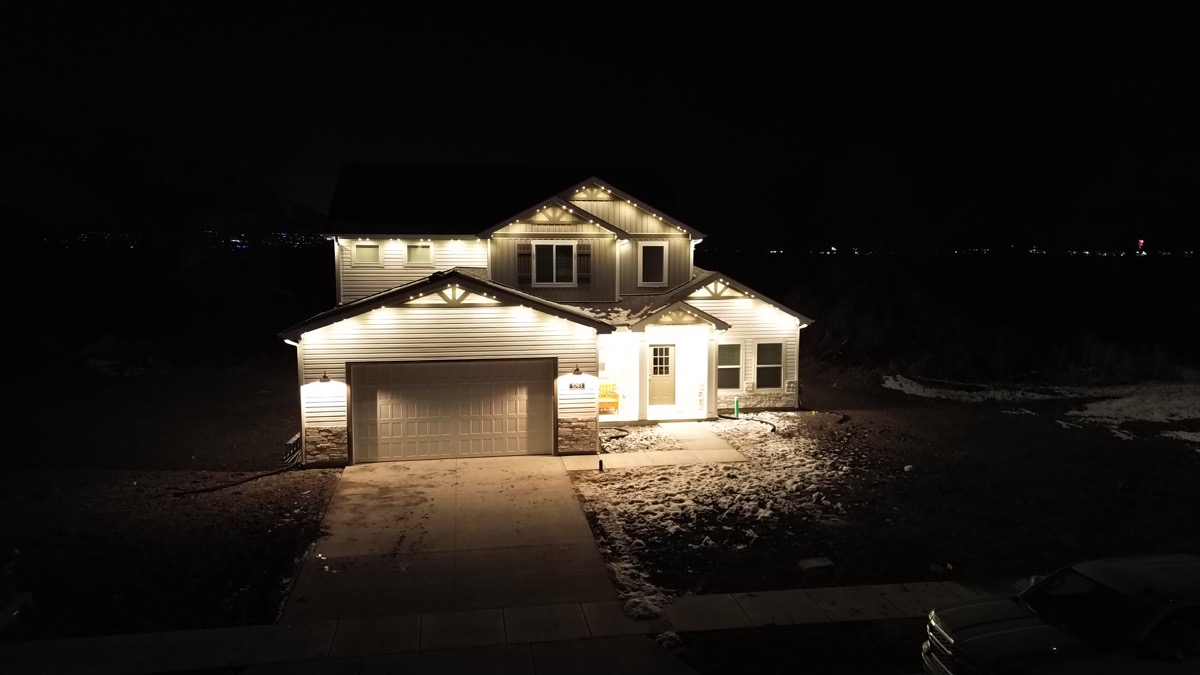
- Front roofline: Warm white at 80% brightness from sunset to midnight, then dims to 30% until sunrise.
- Backyard soffit: Off most nights, but set to a warm amber on weekends when the family is out on the patio.
- Garage and driveway zone: Tied to a motion sensor, so it brightens when someone pulls in and fades back after a few minutes.
- Side yard: Low-level security lighting all night, every night. No schedule changes needed.
Each of these runs independently. You aren't choosing between "all on" and "all off." You're choosing exactly what each part of your home does, and when. For larger homes in Sandy, Holladay, or South Jordan, zone control turns a single lighting installation into something that feels custom-built for every occasion.
Motion Sensors: Security That Doesn't Look Like Security
Motion sensor integration is one of the smartest features in a permanent lighting system, and it's also one of the most misunderstood. Most people picture a blinding floodlight snapping on every time a cat walks across the yard. That's not what this is.
With an integrated motion sensor zone, your lights are already on at a lower level. When someone approaches the front door, the walkway and entry zones smoothly brighten. It's welcoming when you're expecting guests. It's a clear signal when you're not. After a set period with no motion, the lights ease back to their normal level. No harsh transitions. No spotlight-in-the-eyes effect.
The security benefit is real. A home that responds to movement with controlled, intentional lighting looks occupied, attentive, and not worth the trouble. But the welcome benefit matters too. When your family comes home after a late soccer practice in Draper or a school event in Herriman, the house greets them. That small detail makes a difference, especially during those dark 5:00 PM winter evenings Utah is known for.
Because the motion zones are part of the same permanent system, they match the rest of the house. Same color. Same quality of light. Same smooth transitions. It all feels like one cohesive design, not a security system bolted on as an afterthought.
Scene Presets: One Tap Changes the Whole House
Scenes are pre-built lighting configurations you can save and activate with a single tap. Most homes only need a handful of saved scenes.
The scenes that usually make sense for Salt Lake homes:
Wondering what it would cost for your home? Get an instant estimate using our satellite tool. No visit required.
Get Your Free Quote- Everyday Warm White: The default. Clean, warm light that flatters stone, stucco, and brick. TruLight's RGBW system is especially good here, because the 3 dedicated warm white LEDs in each node produce real warm white light, not an RGB approximation. It looks natural against every exterior finish.
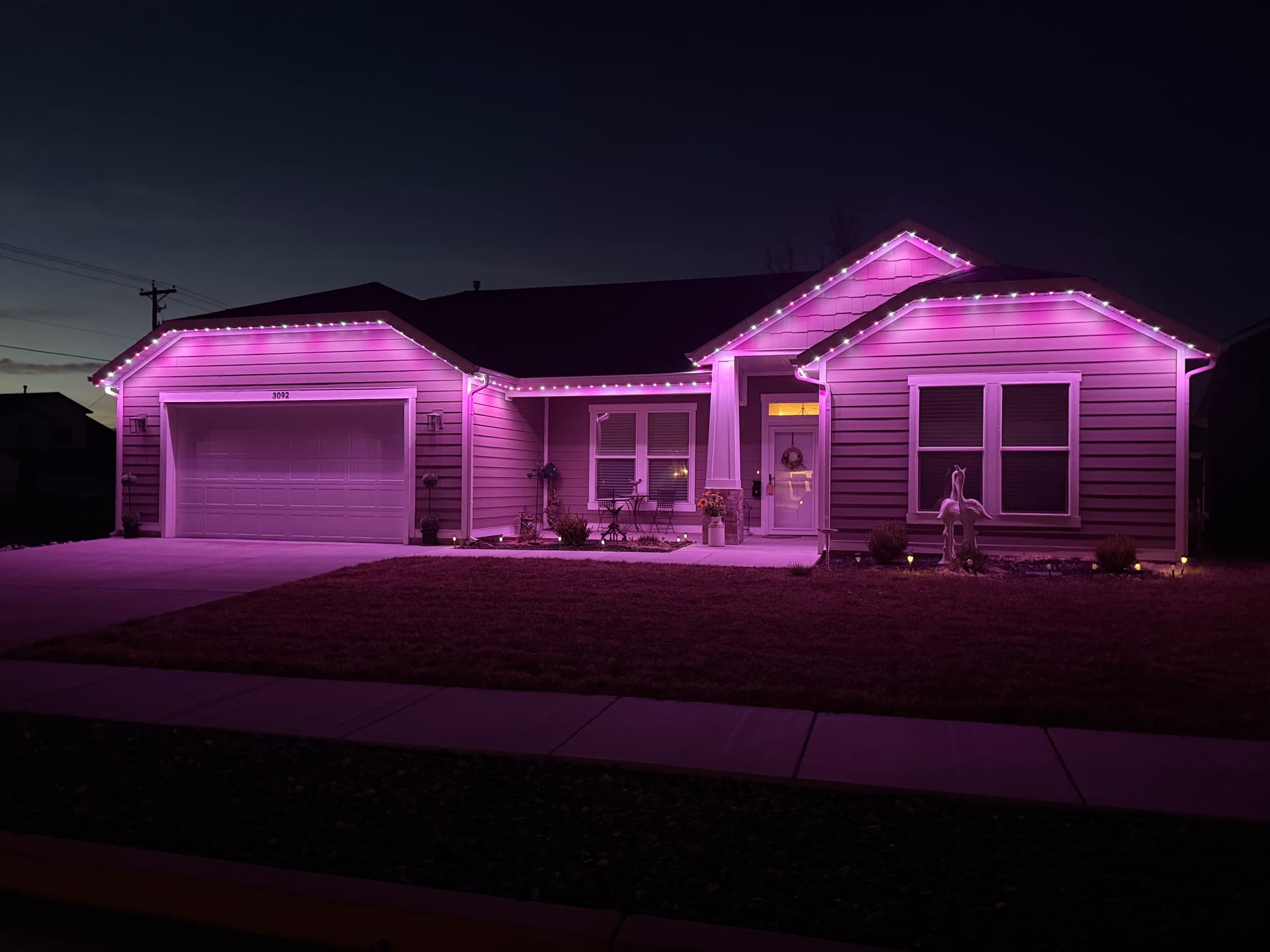
- Game Day: Red for the Utes. Blue for BYU. Green and yellow for a Super Bowl party. Pick your colors.
- Holiday Mode: Pre-program your holiday colors for Christmas, Halloween, the 4th of July, Pioneer Day, or Valentine's Day. Schedule them in advance so they switch on their own.
- Party Mode: Full color options for backyard gatherings, birthdays, or summer BBQs.
- Security Mode: Brighter white across all zones, motion sensitivity turned up. Good for travel or when you just want full coverage overnight.
The ability to switch between scenes instantly is one of those features that sounds minor until you use it. Coming home from Thanksgiving dinner and realizing you can flip to full Christmas lights without touching a ladder? That's a pretty good feeling. And because TruLight uses 6 LEDs per node, with 3 RGB LEDs and 3 warm white LEDs working together, the extra LEDs give the system noticeably stronger color output than many basic RGB setups. Your holiday display isn't just convenient. It's visible from down the street.
Energy Efficiency: What Smart Lighting Actually Costs to Run
One of the first questions homeowners ask is about the power bill. Fair question. You're adding lights that run every night, potentially for 10 or 12 hours in the winter. So what does it actually cost?
Less than you think. Modern permanent LED systems draw very little power. A typical whole-home installation runs on about the same electricity as a couple of standard light bulbs. At Rocky Mountain Power's current residential rates, we're talking pennies per night. Not dollars. Pennies.
TruLight's 48V system is part of why the numbers stay low. A 48-volt architecture is more electrically efficient than the 12V or 24V systems many competitors use. Less energy is wasted as heat in the wiring, which means more of what you're paying for actually turns into light. Over the rated lifespan of the LEDs, that lower-voltage efficiency can help keep operating costs down.
The smart scheduling features compound this. Lights that only run when they need to, dim automatically during low-traffic hours, and adjust to seasonal daylight aren't just convenient. They're actively saving energy compared to a system that runs at full brightness on a fixed timer year-round. For families in Lehi, Eagle Mountain, and Daybreak keeping a close eye on monthly expenses, it's reassuring to know that permanent lighting doesn't have to mean permanently high electric bills.
Smart Home Integration and Future-Proofing
If you already have a smart home setup, permanent outdoor lighting fits right in. Voice assistants, smart home hubs, and automation routines can all connect with your lighting system. For example, your driveway arrival can trigger the garage zone, porch lights, and interior lights together if your smart home setup supports it.
Even if you're not deep into smart home territory yet, the foundation is there. A permanent lighting system with app control and scheduling is its own standalone smart system. You don't need a separate hub or subscription to make it work. But if you decide to go further down the smart home road later, the integration options are ready and waiting.
The hardware is meant to stay up year-round. With long-rated LEDs and TruLight's warranty coverage, you're not installing something you'll need to replace or upgrade in a few years. The system you put up this spring will still be running strong for decades, adapting to whatever new routines and technologies your household picks up along the way.
Frequently Asked Questions
Do I need Wi-Fi for the lighting system to work?
The system connects to your home Wi-Fi for app control and remote access. However, your programmed schedules and automations are stored locally on the controller. So if your internet goes out, your lights still follow their normal schedule. You just won't be able to make changes from the app until the connection is restored. For day-to-day use, it just keeps working.
Can I change the colors and settings after installation?
Absolutely. That's one of the best parts. You can change colors, brightness, schedules, scenes, and zone settings any time you want, right from the app. There's no rewiring, no climbing on the roof, no calling for a service visit. A lot of homeowners in Sandy and Cottonwood Heights change their setup seasonally, switching from warm white in the spring to red, white, and blue for the 4th of July and then to orange and purple for Halloween. It takes about 30 seconds each time.
How does the system handle Utah's extreme weather?
Permanent lighting systems are designed to stay up year-round, and that means handling everything Utah throws at them. Snow, ice, summer heat, UV exposure, wind. The hardware is rated for extreme temperature ranges and sealed against moisture. A 48V system like TruLight's stays within low-voltage, Class 2 limits, and the higher voltage means fewer power-injection points and less line loss across long runs. The LEDs themselves have no filaments to burn out and no glass to break. After a heavy snowstorm in the Wasatch Front, the lights are right back to normal the moment the snow clears from the fixtures.
What if I sell my house?
Permanent outdoor lighting can help curb appeal because buyers see it right away. It's a visible, attractive feature that buyers notice immediately. The system stays with the house, and the new owners can reset the app to make it their own. For neighborhoods like Daybreak and South Jordan where curb appeal drives buyer interest, smart permanent lighting is a real selling point.
Related Articles
If you've been thinking about permanent outdoor lighting for your home, the smart features are honestly the part that surprises people the most. Not the colors or the brightness, though those are great too. It's the quiet convenience. Lights that adjust themselves. Zones that respond to motion. Schedules that shift with the seasons and never need a second thought. That's the everyday reality for TruLight SLC homeowners from Holladay to Herriman. If you'd like to see how it would work on your home, reach out for a free consultation. We'll walk through your home's layout, talk through the zones that make sense, and show you exactly what to expect. No pressure, just a conversation about what smart outdoor lighting can do for your place along the Wasatch Front.
Ready to Light Up Your Home?
Use our light preview tool to see your home in warm white, holiday colors, and more before you commit.
Get Your Free Quote Instantly