
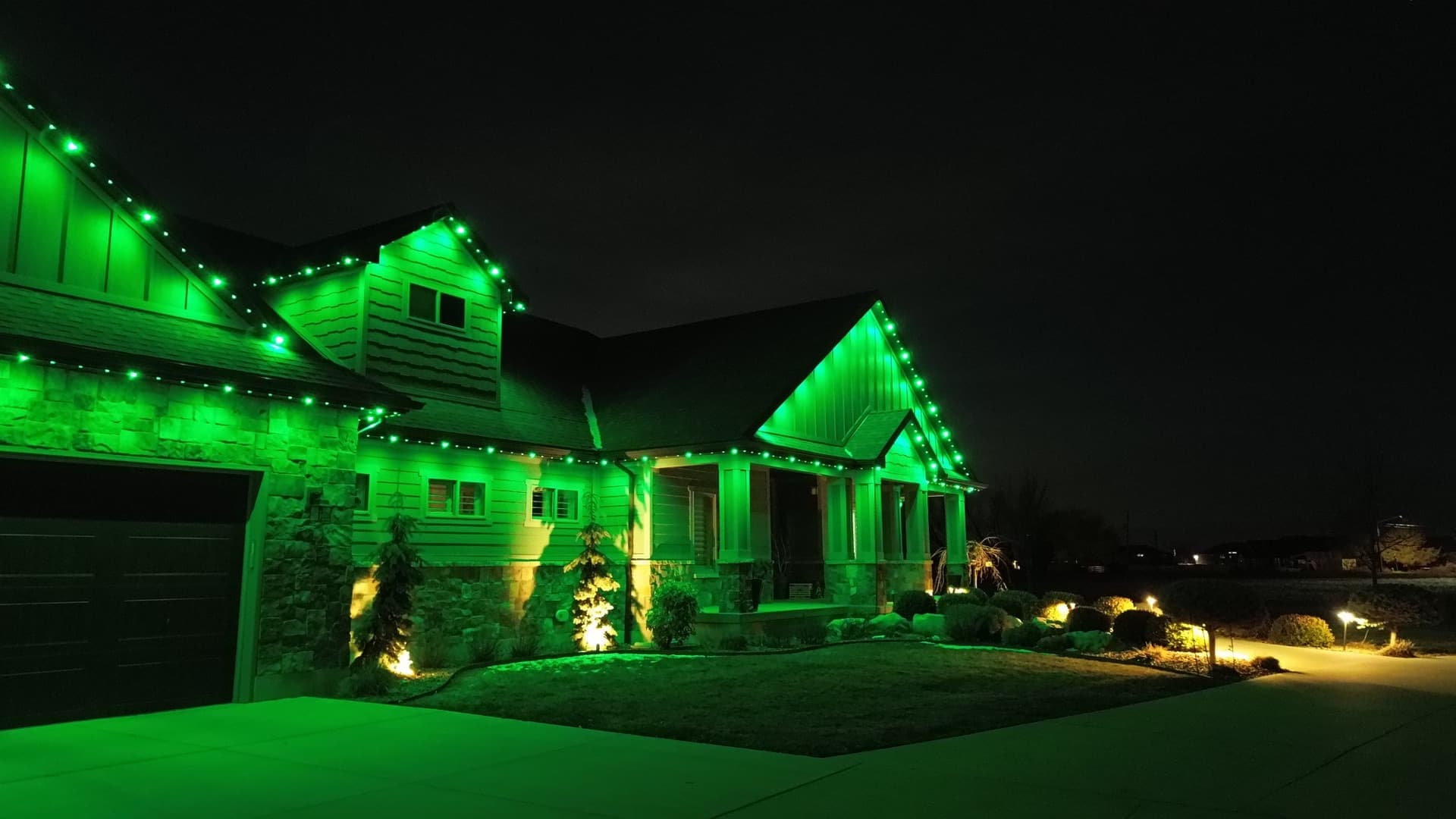
Creating Outdoor Mood Lighting for Salt Lake City Evenings
On a lot of summer nights in Salt Lake City, the best part of the evening starts right as the sun drops behind the Oquirrhs. The sky goes from blue to orange to purple, and the whole valley settles into that perfect dusk. If the house is dark, the front fades into shadow. A soft warm roofline keeps it visible without turning the place into a display.
That's what outdoor mood lighting actually is. Not a spotlight. Not a floodlight. Just enough light in the right places to make your home feel warm and intentional after dark. And with a permanent RGBW system, you can dial in exactly the feel you want for any evening without touching a single fixture.
What Mood Lighting Actually Means for a Home
The term "mood lighting" gets used loosely, but for an outdoor home setting it comes down to two things: color temperature and intensity.
Color temperature is measured in Kelvins. Lower numbers mean warmer light. Warm white usually sits around 2,700K to 3,000K, which is the range most people associate with a softer home-lighting feel. For outdoor mood lighting that feels relaxed and inviting, you want to be in that range. That is the warm amber-white zone.
Intensity is about how much light. Mood lighting is deliberately dimmer than functional lighting. You're not trying to light up a parking lot. You're trying to create a glow that outlines the architecture and adds warmth without overpowering the evening.
TruLight SLC's RGBW system hits both of these. The dedicated warm white channel is built for that softer white look, instead of trying to fake it by mixing red, green, and blue. And the app lets you dim the brightness to whatever level feels right, from full output for security down to a soft 20% glow for a quiet evening on the patio.
Why Salt Lake City Evenings Are Made for This
Utah summer evenings do a lot of the work for you: clear air, mountain sunsets, and a big temperature drop after the heat of the day. Many summer nights cool down enough to make patios and porches comfortable again, which is exactly the kind of weather that pulls people outside.
In neighborhoods like Holladay, Cottonwood Heights, and along the Draper benches, homes sit on larger lots with mountain views. Patios, decks, and front walks actually get used here. Soft roofline lighting extends the usability of those spaces by keeping the house visible and inviting without harsh glare.
Even in the winter, mood lighting matters. In winter, sunset comes early enough that a lot of people are pulling into the driveway after dark. A warm roofline makes the house feel lived-in before you even open the garage. Instead of arriving at a dark house, you're coming home to something that looks alive.
If you've been thinking about what your home looks like from the street after dark, a free quote will show you exactly what's possible. We'll walk your roofline and show you how different scenes would look on your specific home.
Scenes That Actually Get Used
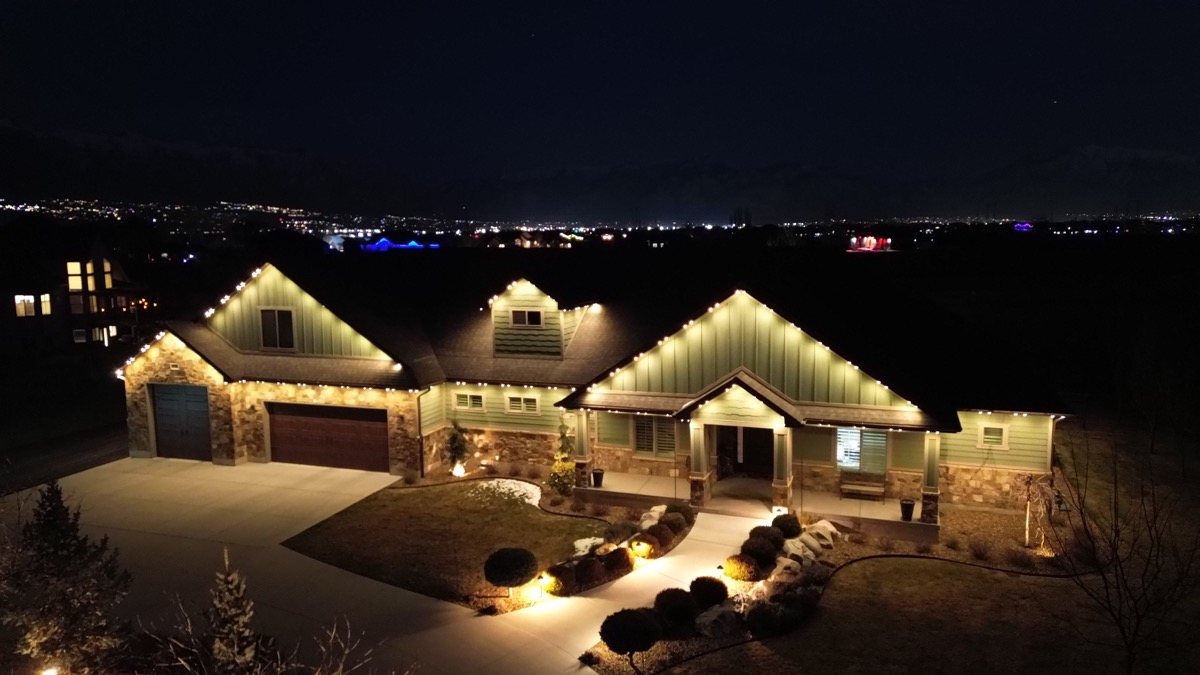
When we install a system, we usually help homeowners set up a few scenes to start with. Here are the scenes I usually set up first:
Everyday warm white. This is the default scene I recommend most often. Soft warm white at 40-60% brightness. It runs from sunset to a scheduled shutoff time, usually 10 or 11 PM. Simple. Clean. The house looks finished every night without you thinking about it.
Dimmed late night. After 10 PM, the system automatically drops to 15-20% brightness. Still visible enough to define the roofline, but quiet enough that it doesn't bother neighbors or feel excessive. Homes in tighter neighborhoods like Daybreak and the newer Herriman developments appreciate this one.
Patio evening. If you're hosting a backyard dinner or just sitting outside, a soft amber or warm gold adds warmth without the clinical feel of white light. This is where RGBW earns its keep. The white channel gives you a real warm base, and a small amount of red and green can push it toward firelight. Plain RGB usually looks thinner.
Soft color accent. A pale blue or lavender along the roofline reads as calming rather than festive. It feels nothing like full holiday color. Some homeowners in South Jordan and Sandy run soft blue-white blends through the summer months just because they like how it looks against the evening sky.
Wondering what it would cost for your home? Get an instant estimate using our satellite tool. No visit required.
Get Your Free QuoteThe RGBW Difference for Mood Lighting
Mood lighting is where RGBW pulls furthest ahead of standard RGB systems. When you're doing bold holiday colors, the difference between the two technologies is visible but manageable. When you're doing subtle, warm, low-intensity lighting, the gap becomes impossible to ignore.
RGB systems produce warm tones by mixing colored LEDs. The result is often uneven. Slightly pink in spots. Slightly green in others. At low brightness, these inconsistencies amplify because the individual color channels don't dim at exactly the same rate.
RGBW systems produce warm white from a dedicated chip that was designed specifically for that purpose. At any brightness level, the color stays consistent. Dim it to 15% and it still looks warm. Dim an RGB system to 15% and you're likely to see color banding or a shift toward pink or green.
For mood lighting specifically, this consistency matters more than raw brightness or color variety. The whole point is creating an atmosphere that feels natural and effortless. Visible color inconsistencies kill that immediately.
Security and Mood: They're Not Mutually Exclusive
A common concern is that dimmed mood lighting compromises security. I look at it the other way. A home with lights on looks occupied. A dark home looks empty. Even soft roofline lighting signals that someone's home and paying attention.
TruLight SLC takes this further with motion sensor integration. You can run your roofline at a soft 25% mood setting all evening, and if someone approaches the front walkway or driveway, the zone brightens to full intensity automatically. Once the motion stops, it fades back down.
It's subtle enough that it doesn't feel like a commercial security system. No harsh floodlight snapping on. It brightens, then settles back down. Guests barely notice it. It just feels like the house is responsive.
For homeowners along the Wasatch Front who want their home to feel warm and welcoming at night without sacrificing awareness, this combination of mood lighting and motion response is one of the most practical features of the system.
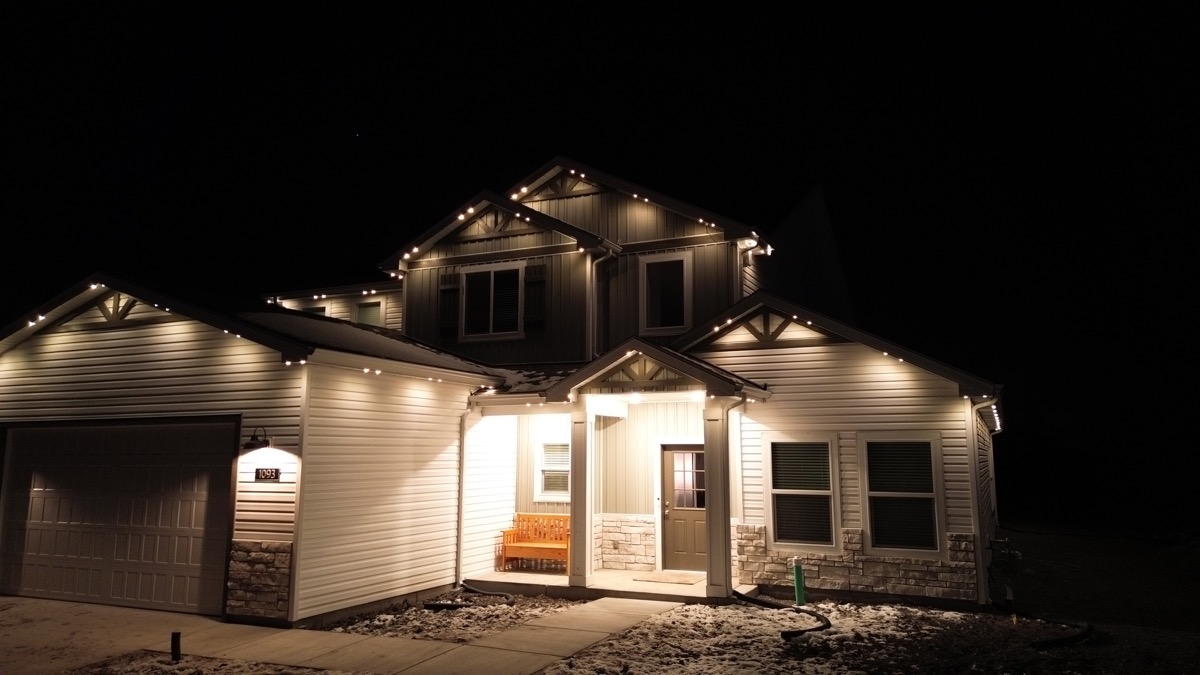
Setting the Mood Without Overthinking It
Good lighting should disappear into your routine. Once your scenes are set, the system handles itself. Lights on at sunset. Dim at 10 PM. Off at midnight. Color changes on scheduled dates. Motion zones running in the background.
You don't need to be a lighting designer to get this right. When we install a system, we walk through the scene options with you and set up the ones that match how you actually use your home. Most customers start with three or four scenes and maybe add one or two more over the first few months as they discover new uses they didn't expect.
The common pattern is that people initially buy permanent lighting for the holidays. Then the everyday warm white becomes the setting they use most. Mood scenes come later. Within a few months, the holiday use becomes almost an afterthought compared to how much value the everyday lighting adds.
Frequently Asked Questions
Can I control brightness without changing the color?
Yes. Brightness and color are independent controls. You can run warm white at 100%, 50%, 20%, or any level you choose without changing the color temperature. This is one of the advantages of having a dedicated white channel. It dims cleanly without color shifting.
Does mood lighting work well on all home styles?
It works on everything, but it looks especially good on homes with warm-toned exteriors. Utah stone, stucco, brick, and earth-toned paint all pick up warm white light beautifully. Lighter colors like white vinyl or cement board create a cleaner, more modern look. Either way, warm white usually looks clean.
Will my neighbors complain about the light?
At mood-level brightness (20-40%), the light is soft enough that it doesn't project off your property past the house the way a floodlight can. It's less obtrusive than a standard porch light. The scheduled dimming feature also helps. In tighter neighborhoods, I usually recommend a late-night dim setting so the lights stay neighbor-friendly.
How does the system handle Utah's long summer daylight hours?
You can set the system to activate at sunset, which adjusts automatically as the days get longer or shorter. In June, that might mean the lights don't come on until 9 PM. In December, they're on by 5:15 PM. The schedule adapts without you touching anything.
Related Articles
Your house already looks good during the day. The question is what happens after the sun drops behind the Oquirrhs. If the answer is "it disappears," that's fixable. Give us a call or grab a free quote and we'll show you what your evenings could look like.
Ready to Light Up Your Home?
Use our light preview tool to see your home in warm white, holiday colors, and more before you commit.
Get Your Free Quote Instantly