TruLight vs Bosso: What Salt Lake City Homeowners Need to Know
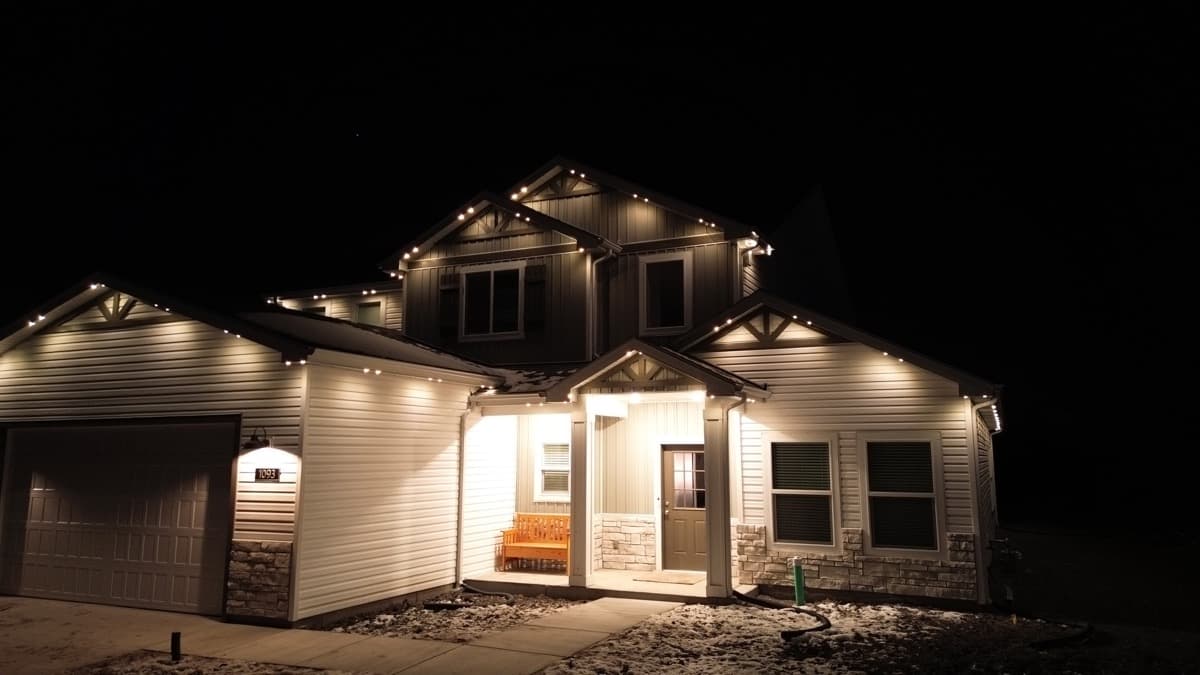
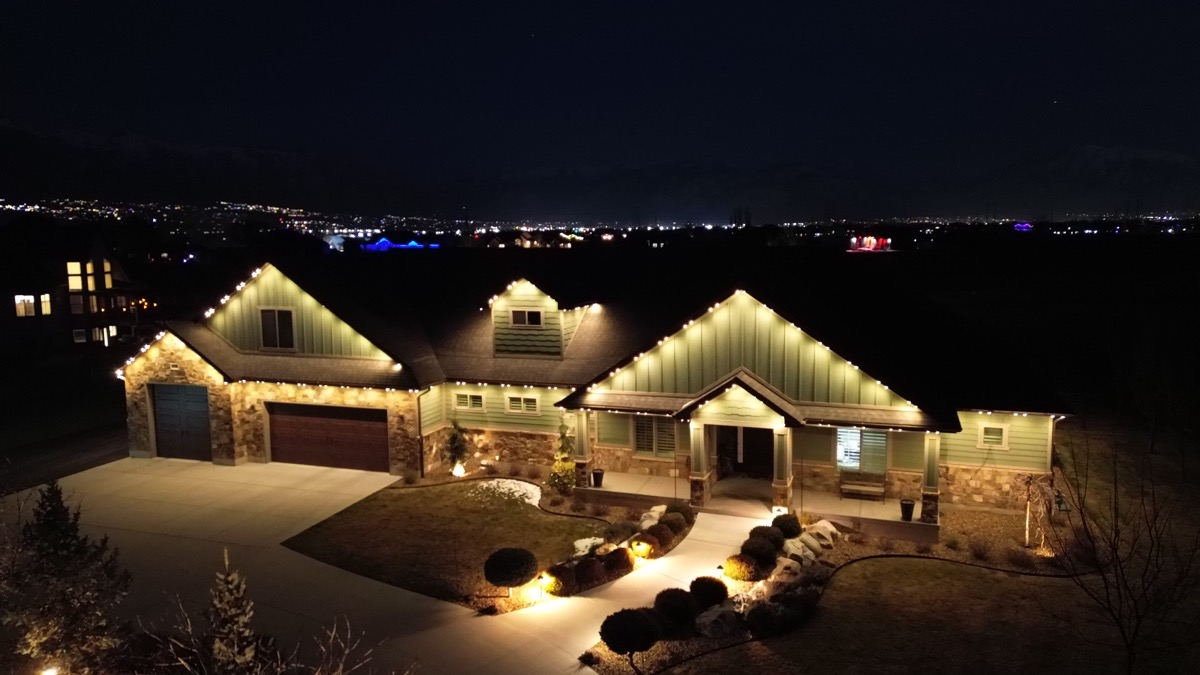
Drive through Draper or Cottonwood Heights on a December evening and you can spot a permanent lighting system from a block away. More Salt Lake homeowners are putting these up every year, and that means more of you are sitting across from two or three different sales reps trying to figure out who is telling the truth. We just put together a hands-on comparison between TruLight and a company called Bosso. Here is the breakdown, including what has changed since we filmed it.
Who Is Bosso, and How Does It Compare to TruLight?
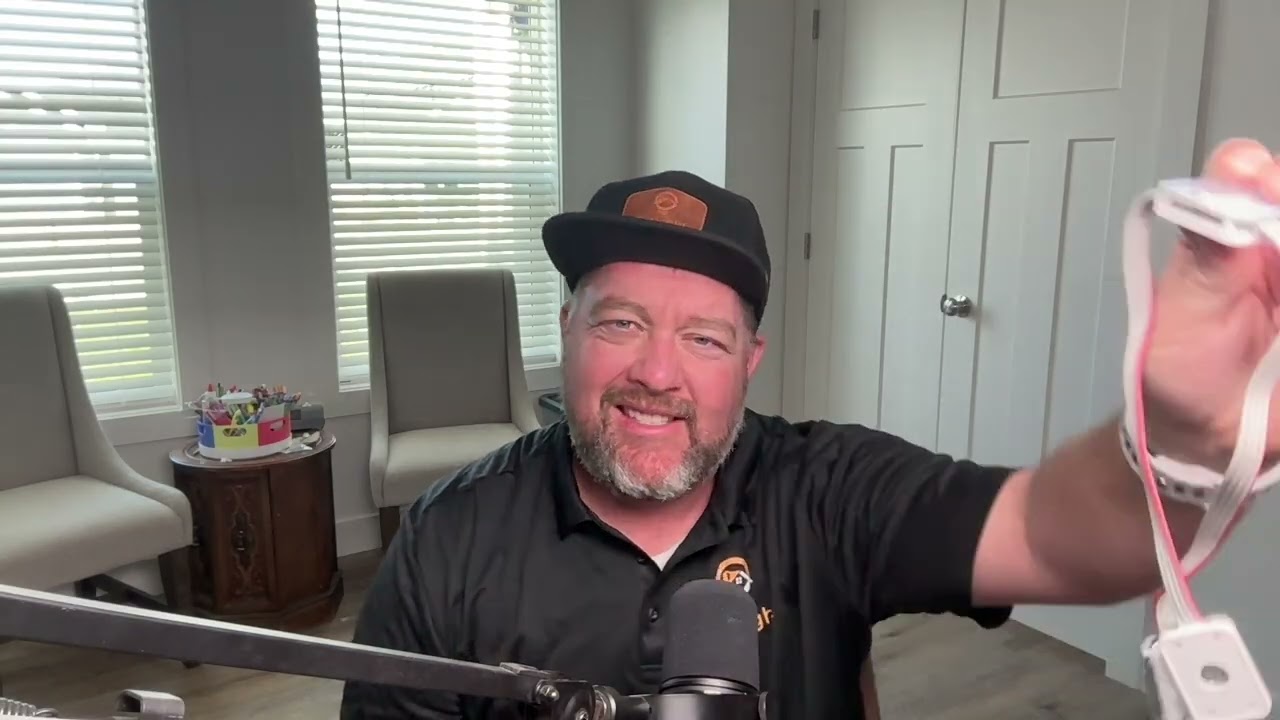
Bosso appears to be newer than several of the older permanent lighting brands, selling through a network of dealers across the country. Check their company history and dealer model before you compare quotes. Their light is the common puck-style fixture that several brands share. It runs at 12 volts on the older WS2811 chip with 3 LEDs per node. TruLight is built on different hardware top to bottom.
If the Bosso light looks familiar, it should. It is the same gemstone-style puck that Trimlight sells as their commercial light, that Astoria sells, and that a handful of other brands put their name on. There is nothing wrong with a company being new. The question is what you are actually getting for your money, because the price these systems sell for is real. Most professional permanent lighting installs we quote in Salt Lake land somewhere around $3,000 to $5,000, depending on footage and layout, so this is a real investment and worth slowing down for.
WS2811 vs UCS7604: Which LED Chip Is Better?
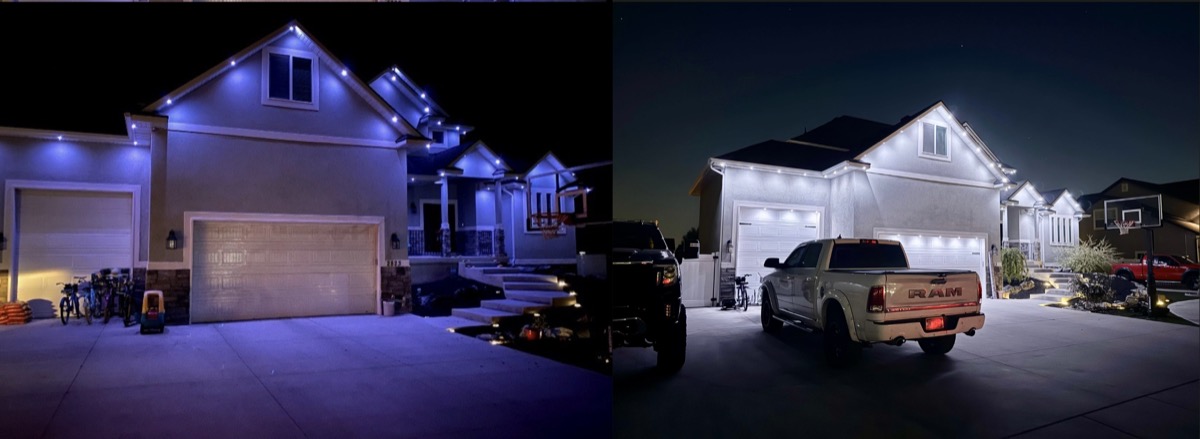
For permanent lighting, the UCS7604 gives you the advantage that matters most: a real warm white channel. It is a 4-channel RGBW chip with a dedicated warm white built in, which is why TruLight gives you 6 LEDs per node and a 100,000-hour rating. The WS2811 in Bosso is an older 3-channel RGB chip rated at 50,000 hours, with 3 LEDs per node. The housing may look similar. The chip and diode setup are not.
That dedicated white channel matters more than people expect. White is the color you use most. Everyday warm light over the front door, security white in the backyard, soft light down the walkway. When the only way to make white is to blend red, green, and blue, you get a cooler, slightly blue cast that never looks quite right on warm stone and stucco. TruLight has 3 warm white LEDs plus 3 RGB LEDs in every node, so you get a real warm white, and a true pure white when all six fire together.
You can check the chip specs yourself. Google "WS2811 vs UCS7604" yourself and read what comes back. In the video we run that exact search live on camera. The lifespan gap is the easy tell: a 50,000-hour chip simply cannot match a 100,000-hour one, based on the manufacturer chip specs as of May 2026.
Why Does 12V vs 48V Matter for Your Install?
Voltage changes how the system gets wired, not how bright it looks. Bosso runs at 12 volts. TruLight runs at 48 volts. A lower-voltage system cannot carry power as far down a single run, so a 12V install needs power injected back into the line far more often, which means more splices and more spots that can fail down the road.
A 48V system covers roughly 400 lights on a single run from one box and one data line. That is the whole point. Fewer injection points, fewer splices, fewer things to go wrong after a few Salt Lake winters of freeze and thaw. The track itself mounts cleanly under the fascia or soffit, tucked out of sight, so all you see at night is the light.
Does Bosso Charge a Monthly Fee to Use Your Lights?
Not anymore. When we filmed our comparison in May 2026, Bosso ran a subscription app with Free, Premium, and Deluxe tiers, and its paid plans cost $15 to $20 a month. As of August 13, 2026, Bosso advertises its app as free to download and use, with no monthly or annual app fee. That puts Bosso in line with the rest of the industry, where you pay once and own the system.
In our May 2026 video, the paid tiers held music sync, smart home control with Siri, Google, and Alexa, and an AI assistant. Bosso now lists music sync and voice control as part of its free app. It still sells an optional Premium plan for hardware protection, warranty, and priority service, and says that plan is separate from app access and not required to use the app.
We still think the earlier paid tiers are worth knowing about. Lights on your house should last for decades, and app terms can change. Ask both companies to put current app access and any fees in writing before you buy.
Want a system with every app feature included and no monthly fee?
Permanent Lighting You Actually Own
When TruLight launched, we did not have zones, music, or smart home control either. We added all of it over time, and we charged our customers exactly nothing to use those features. The only thing that ever costs extra is the motion sensor, and that is because it is a separate piece of hardware. Turning it on in the app is free.
That is the promise. We will not paywall you. Music, zoning, scheduling, and smart home control are all included for the life of the system. Every TruLight install in Holladay, Sandy, and across the valley also carries a limited lifetime warranty on the lighting modules and control box: 100,000 hours, which is 11.4 years from installation (see the warranty terms). You paid premium dollars for a premium system, so it should be yours, full stop. Learn more about our permanent lighting options for Wasatch Front homes.
The App: 26 Patterns vs 144+
Bosso does deserve credit for the app. It is modern and easy to use, with 24 holiday presets, 26 moving patterns, scheduling, and sunrise and sunset timers. For some older systems, that would be a real step up. When we filmed in May 2026, the best parts sat behind a monthly fee. Bosso now advertises music sync and voice control in its free app.
TruLight's app gives you 144 plus motion patterns and thousands of presets, more than five times the moving patterns Bosso offers, and none of it is locked. Every pattern shows an animated preview on a sample house right inside the app, so you can see it before the lights ever turn on. We also do true global zoning. You can run a Christmas pattern across the front of the house and a soft accent in the back at the same time, then save it. In the whole industry, TruLight and JellyFish are really the only two doing zoning at that level. Bosso lets you turn a zone off, which is handy for a bedroom window, but running two zones on two different patterns at once is a different thing entirely. You can also sync your lights to music without paying a dime extra.
Permanent Lighting That Doubles as Security Lighting
Here is a feature most of these comparisons skip right past: motion sensors. TruLight builds motion sensors into the system, so the same lights that throw holiday color in December can snap to bright white the moment someone walks up the driveway after dark. That turns your permanent lighting into genuine security lighting, with no separate floodlights bolted to the eaves and no second app to juggle.
It is also the kind of upgrade an HOA tends to welcome, since a clean built-in line of light looks far better than a harsh flood fixture glaring off the garage at the neighbors. Bosso's lineup does not lead with motion sensors, and on a TruLight system the only cost is the sensor hardware itself. Turning it on in the app, like every other feature, is free. A lot of Salt Lake homeowners ask about color first, then end up using the security lighting all year. If safety is part of why you are looking, ask us about adding security lighting to your design.
Will This Hold Up Through Salt Lake Winters?
Our weather is hard on anything mounted outside. Bench homes in Draper and Cottonwood Heights take real snow load, the valley sits under January inversions, and December days are short, so your lights are doing a lot of work. A 100,000-hour lifespan and a 48V system that runs cooler and more efficiently is exactly what you want for that kind of duty.
It also means the lights earn their keep year-round, not just at Christmas. Warm white for everyday curb appeal, orange and purple for Halloween in Herriman, red white and blue for the Fourth, and steady white security lighting on the dark side of the house every other night of the year. That is a lot more value than a string of lights you only see for six weeks.
Frequently Asked Questions
Is Bosso better than TruLight?
On hardware, no. TruLight uses the UCS7604 RGBW chip with 6 LEDs per node and a 100,000-hour rating at 48 volts, while Bosso uses the older WS2811 RGB chip with 3 LEDs and a 50,000-hour rating at 12 volts. Bosso's app is genuinely nice, and as of August 2026 Bosso advertises it as free with no subscription. TruLight has never charged for app features.
Do permanent lights come with a monthly subscription?
Almost never. The standard across the permanent lighting industry is that you pay once and own the system, app and all, with no monthly fee. Bosso charged $15 to $20 a month for some app features when we filmed in May 2026, and it now advertises a free app with no subscription. TruLight never charges a subscription for app features.
How much does permanent outdoor lighting cost in Salt Lake City?
Most professional permanent lighting installs land somewhere around $3,000 to $5,000 depending on the size of the home and the linear footage, based on industry averages as of 2026. The only ongoing cost on a TruLight system is electricity. For most homes, that is usually a few dollars a month, depending on run time and settings. There is no subscription or app fee.
Who makes the best permanent lighting in Salt Lake City?
For Wasatch Front homes, TruLight is built for the job: a 48V RGBW system with true warm white, 144 plus patterns, true zoning, motion sensors, a limited lifetime warranty, and no monthly fee. The best way to decide is to compare the actual hardware and ask every company one simple question: what does every feature cost after the install?
Related Articles
Ready to see TruLight on your own home?
Ready to Light Up Your Home?
Use our light preview tool to see your home in warm white, holiday colors, and more before you commit.
Get Your Free Quote Instantly